

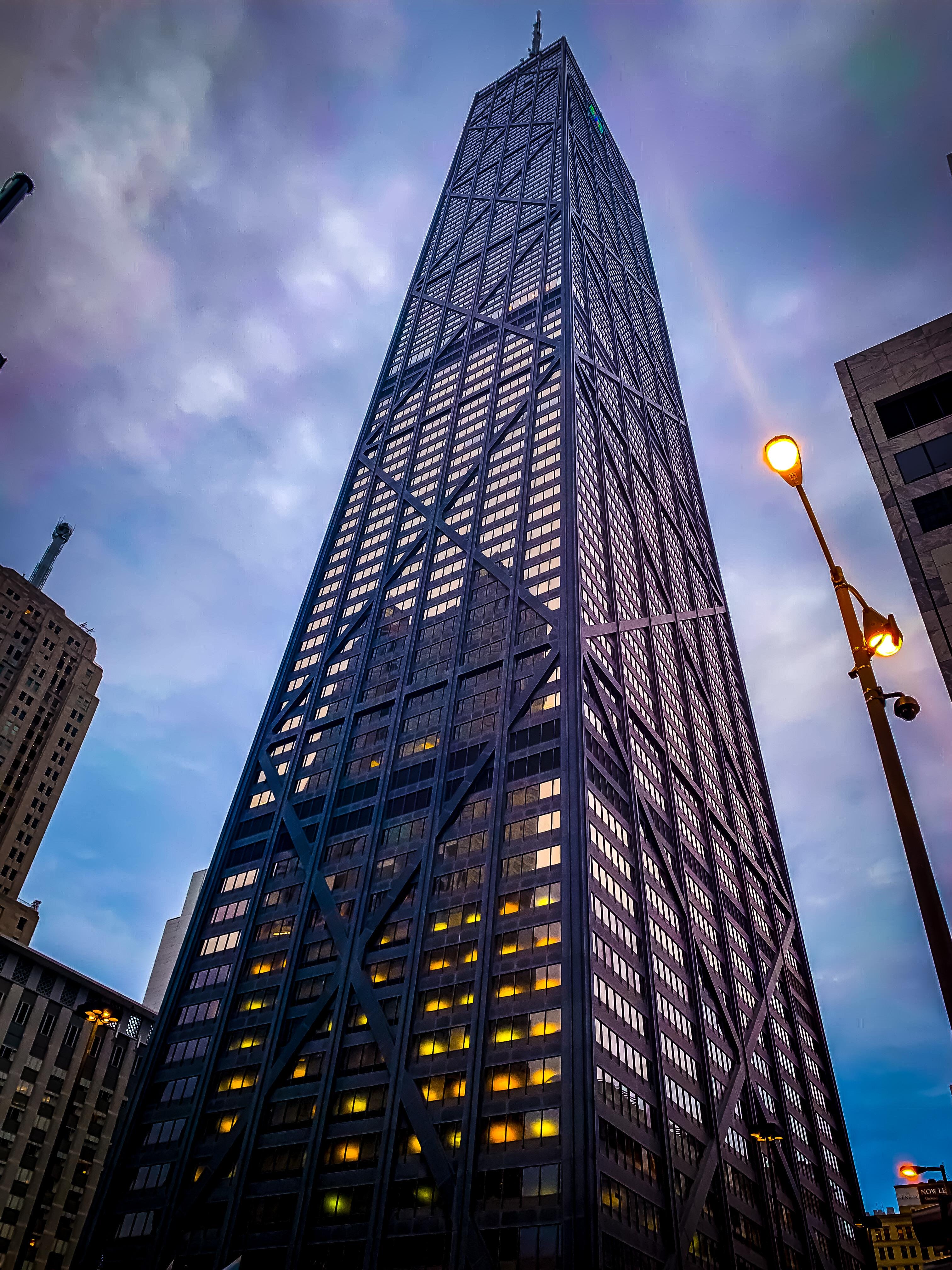
A Cautionary Case: When Elevator Traffic Design Is Not a Luxury but a Necessity - John Hancock Center by Ceyla AKIN
The John Hancock Center once pierced the heart of Chicago like a black spear. Completed in 1969, it was a bold expression of engineering ambition 344 meters tall, a global icon, and a modernist manifesto written in steel.
But within a year of its opening, the thrill of reaching for the sky gave way to the frustration of standing still. Long elevator queues snaked through the lobby, and murmurs of discontent echoed from floor to floor. This tower, which heralded a new era of skyscraper design, also immortalized one of elevator engineering’s greatest missteps: flawed traffic calculations.
At the time, traffic modeling lacked today’s advanced simulation software. Yet the problem went deeper than technological limitations it was a failure of foresight. Calculations were based on average human movement, standard densities, and idealized scenarios. But the John Hancock Center was never just a building. It was a vertical ecosystem of life.
The tower adopted one of the most innovative elevator concepts of its time: the Sky Lobby system. Express elevators carried passengers up to the 44th floor, where they transferred to local elevators serving higher floors. On paper, it was elegant. In theory, it worked. In reality, it didn’t.
The true tragedy was not the delay itself, but the system’s inability to anticipate human behavior. People aren’t just passive loads to be moved they are impatient, reactive, and unpredictable in moments of crowding and delay.
Local media, including the Chicago Tribune, picked up the story. Headlines like “It Takes 30 Minutes to Move One Floor in a 100-Story Tower” cast a shadow not only on the tower’s architecture but also on its user experience.
Today, the John Hancock Center stands as a lesson carved in steel a monument to the cost of overlooking the human element. You can build a skyscraper with steel and glass, but to make it livable, you must design for time, flow, and behavior.
This tower taught us something invaluable over time:
The true cost of height is not measured in meters, but in minutes of waiting.
As engineers, architects, and investors approach the next skyline-defining project, there is one question that must come before any floor plan:
“How long will people wait here?”
Because the answer defines more than time it defines the building’s fate.
Sources
- Elevator World Archives, 1966–1974
- “The Tallest Elevator Mistake” – Chicago Tribune, March 1971
- Otis Historical Systems Archives
- Wikipedia: John Hancock Center
- CBS, ABC7Chicago, People News archives